
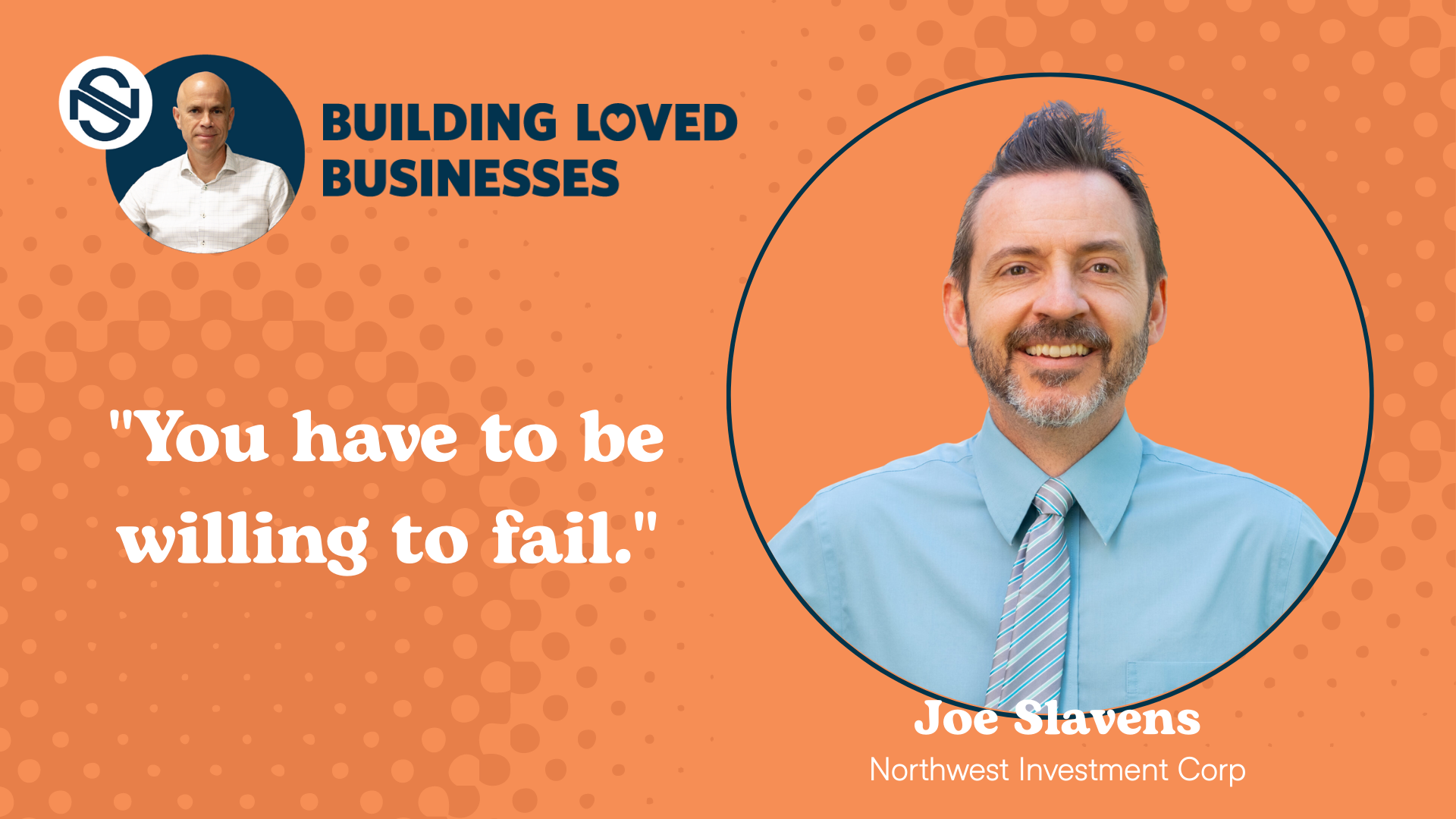
On Building Loved Businesses, I’ve had the privilege of hearing some remarkable stories—but this one spans nearly a century of reinvention, resilience, and disciplined entrepreneurship.
In this episode, I sat down with Joe Slavens, steward of a multi-generation family enterprise based in Davenport, Iowa. Over almost 100 years, Joe’s family has built—and rebuilt—businesses across banking, real estate, software, trust services, and tax and accounting. What struck me most wasn’t just the longevity of the business, but the clarity of values that have carried it forward through massive economic change.
This is a story that begins in the depths of the Great Depression—and continues today as a modern family holding company built for the future.
1933: When Persistence Wasn’t Optional
Joe took me back to 1933.
His grandfather was a barber in a small town in southern Iowa during the Great Depression. With two barbers and not enough customers to support both families, he made a decision that would shape generations to come: he packed his wife, his one-year-old son, and everything they owned into a car and drove—without a plan—until opportunity appeared.
That opportunity was a two-chair barber shop in Newton, Iowa.
Joe’s grandfather auditioned for the job while his family waited in the car. He got hired. And then, like many entrepreneurs during hard times, he started looking for more.
He sold repossessed cars on the side. He applied—five or six times—to Goodyear Tire before finally being hired through sheer persistence. He rose through the ranks until one moment clarified everything: after accepting a horse as payment and making money on it, a regional manager told him, “We’re in the tire business. We don’t take horses.”
That was the moment Joe’s grandfather realized something critical:
He was in the business of making money. Goodyear was in the business of selling tires.
So he went independent.
That independence led from tires to appliances, from appliances to real estate, from real estate to apartments—and eventually to a small investment in Northwest Bank & Trust, an investment that would change the family’s trajectory forever.
The Power of Small Ownership and Big Vision
What fascinated me was how small that initial bank investment was:
5% of a company that owned 5% of a company that owned 50% of the bank.
Tiny ownership—huge upside.
Joe’s father and uncle, both attorneys, had the foresight to include rights of first refusal. Over time, they accumulated more shares. When banking regulations later forced the majority shareholder to sell, they exercised those rights—borrowing $1 million in 1970, closing their law practice, and going all in on banking.
That move shocked the seller. It also set the foundation for decades of growth.
Surviving the 1980s Farm Crisis
The 1970s were good to Midwest banks. The 1980s were brutal.
In the Quad Cities—once the farm implement capital of the world—unemployment spiked from 3–4% to 25% in a matter of months. Banks failed. Others were recapitalized by parents or regulators.
Joe’s family bank was highly leveraged. Survival was not guaranteed.
But through discipline, trust with borrowers, and a relentless work ethic, they made it through. Joe eventually joined the business himself, trained as an attorney and banker, cutting his teeth on loan workouts and troubled assets.
One insight Joe shared stuck with me:
Banking teaches you how every business really works—and who people really are when things get hard.
That experience shaped not just how he evaluated risk, but how he evaluated character.
Entrepreneurship Inside a Regulated Industry
Banks don’t usually get credit for being entrepreneurial—but Joe and his family refused to think like “bankers.”
They saw themselves as business people in the business of banking.
That mindset led them to:
- Build a software company serving financial institutions
- Reignite and grow a trust business
- Invest heavily in real estate
- Later acquire and scale a tax and accounting platform
By the time they sold the bank, nearly 45% of revenue came from non-interest income—a model more aligned with large national banks than community institutions.
They weren’t breaking the rules. They were expanding the definition of what a bank-adjacent business could be.
Knowing When to Sell—Not Because You Have To, But Because You Get To
One of the most powerful moments in our conversation came when Joe explained the decision to sell the bank.
By 2022, consolidation, fintech disruption, credit union expansion, and regulatory pressure had reshaped the industry. Joe realized something critical:
He didn’t want to be forced to sell someday. He wanted to choose to sell.
After walking away from deals that didn’t align with employee, customer, or community values, the right partner emerged: Time Bank out of Illinois. Shared values. Shared culture. Shared respect for people.
They closed the sale on December 31, 2024.
And just like that, the bank exited—but the family enterprise did not.
The Business Today: A Modern Family Holding Company
Today, the Slavens family operates a diversified holding company that includes:
- A trust company managing ~$550M in assets for 700 families
- A tax & accounting firm with 4,500+ clients and ~$5M in revenue
- A software company serving financial institutions nationwide
- A real estate portfolio across commercial and retail assets
Each business operates independently—but with natural synergies, shared values, and long-term thinking.
Joe evaluates opportunities using a clear filter:
- Strategic fit with existing businesses
- Need for operational support (HR, IT, finance, capital)
- Recurring revenue
- Strong leadership already in place
- Alignment with next-generation interests
He’s not trying to flip businesses. He’s trying to build them with people.
A Philosophy Built on Integrity and Learning
Throughout our conversation, a few themes came up again and again:
- Hard work beats talent—but nothing beats hardworking talent.
- Don’t fall in love with your business. Do what you love.
- Success teaches less than failure.
- The real competitive advantage is the ability to learn.
Joe shared stories of family promises kept decades after the people who made them had passed away. That kind of integrity isn’t marketing—it’s culture.
And when I asked what his grandfather would say about the future, Joe didn’t hesitate:
“Experiment. Bet on yourself. Be willing to fail. Learn fast. Then get back up.”
Why This Story Matters
This wasn’t just a conversation about banking, or real estate, or investing.
It was about building businesses people love—across generations.
Loved by employees.
Loved by customers.
Loved by communities.
And yes—loved by owners.
Because when those align, you don’t just build companies.
You build something that lasts.