
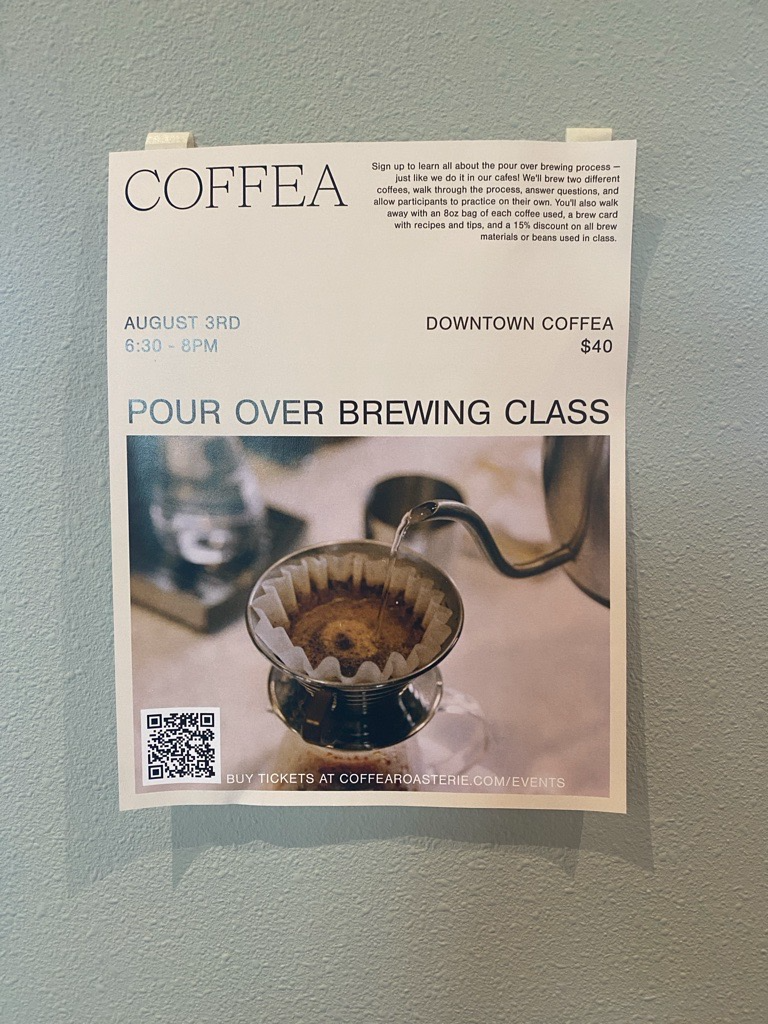
There’s a coffee shop in my hometown called Coffea. I know it well because my daughter is a barista there.
You can walk in and order a great cup of coffee for $5.
Or — and this is the part that stopped me cold — you can pay $40 for a Pour Over Brewing Class that turns you into a better barista at home.
Same business.
Same expertise.
Completely different value.
That contrast is at the heart of B. Joseph Pine II’s new book, The Transformation Economy, and I’ve been thinking about it ever since I put it down (with about half of it underlined).
Here’s the idea.
Pine and his co-author James H. Gilmore were the first to articulate what they call the Progression of Economic Value. It’s the ladder that runs from commodities to goods to services to experiences to transformations. Each step up delivers more value to the customer — and commands a higher price.
Most businesses are somewhere in the middle.
They’ve moved past selling a product. They’re offering a service. Some are even charging for the experience. And that’s good.
But it’s not the top of the ladder.
The top is transformation.
Pine’s argument is simple — and a little uncomfortable: your clients don’t actually want your service. They want what your service does to them.
They want to become something:
- More confident
- More capable
- More profitable
- Less stressed
The service is just the vehicle.
When you charge for the vehicle instead of the destination, you’re leaving money on the table.
Think about your own clients for a second.
What do they actually walk away with after working with you? Not the deliverable. Not the engagement. The change. The outcome. The version of their business — or themselves — that didn’t exist before you showed up.
That’s what they’d pay for.
That’s why a $5 cup of coffee and a $40 brewing class can coexist. One is a transaction. The other is a transformation. One gives you caffeine. The other gives you capability.
I give this book five out of five stars — and I’m not saying that solely because I’m quoted in it. Pine doesn’t just make the case for transformation. He shows you how to get there from wherever you’re starting, whether that’s a service model or an experience.
If you run a service business that isn’t growing as fast as you would like, this is the book to read right now.
Go get it. Underline the parts that sting a little.
Those are the ones that matter.
And if it gets you thinking about where your business sits on that progression, I’d love to talk.
