
There’s something fascinating about niche businesses.
Not because they’re flashy.
Not because they scale overnight.
And not because they’re chasing trends.
The businesses that stick with me are the ones solving deeply human problems — often problems most people don’t even realize exist until it’s personal.
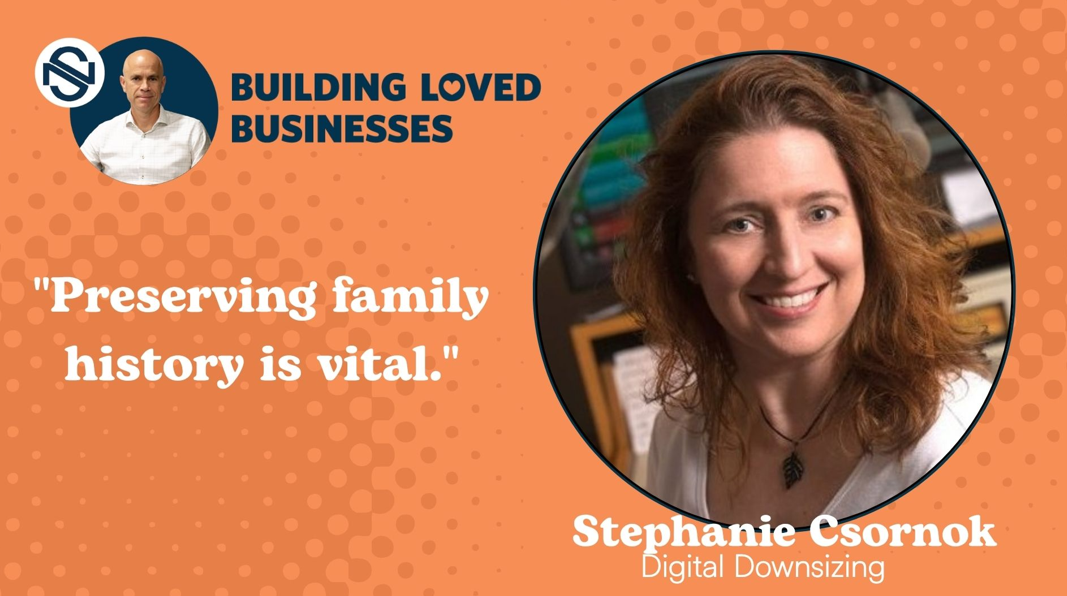
That’s exactly what I found in my conversation with Stephanie Csornok, founder of Digital Downsizing in Rapid City, South Dakota.
Stephanie is an Air Force veteran, former radio broadcaster, and now the owner of a business dedicated to preserving memories before they disappear forever.
And after talking with her, I couldn’t stop thinking about one thing:
How much of our history is sitting in boxes right now… slowly fading away.
A Business Born From a Personal Problem
Like many great entrepreneurs, Stephanie didn’t start with a grand business plan.
She started with a problem.
When her parents moved from Chicago to Rapid City, she found herself staring at decades of family memories — slides, negatives, VHS tapes, film reels, photos — all packed away in boxes.
And she realized two things at the same time:
- She couldn’t bear to throw them away.
- She had nowhere to keep them.
That tension became the spark for the business.
She started looking for someone locally who could transfer those memories into digital formats.
Nobody existed.
So she built the business herself.
That’s one of the patterns I see over and over again with loved businesses:
they often begin when someone says,
“Someone should really do this…”
…and then decides to become that someone.
From Broadcasting to Entrepreneurship
Before Digital Downsizing, Stephanie spent nearly two decades in broadcasting.
Her career path was anything but ordinary.
She was a music major in college before landing an internship at a local NBC affiliate — on the exact day a tornado ripped through town.
Talk about a first day.
She spent the night chasing breaking news with camera crews and flying over damage zones in helicopters.
She was hooked instantly.
That experience eventually led her into the Air Force, where she spent 11 years working in broadcasting and communications before transitioning into civilian radio for another eight years.
And interestingly enough, broadcasting prepared her perfectly for entrepreneurship.
Not because it taught her business systems.
Not because it taught her accounting.
But because it taught her how to adapt.
In broadcasting, you don’t always get perfect conditions.
You solve problems in real time.
You improvise.
You make mistakes.
And then you figure it out.
That mindset became foundational when she launched Digital Downsizing.
A Museum of Analog Technology
One of my favorite moments in the conversation was when Stephanie described her workspace.
It sounds less like an office…
and more like a museum.
VCRs.
8mm film scanners.
Reel-to-reel machines.
8-track players.
Vintage cameras.
Old film equipment.
Most of it sourced from eBay.
And unlike modern digital workflows, this work is incredibly hands-on.
Some media can’t simply be “uploaded.”
Many tapes require constant monitoring.
Old reels break.
Audio has to be repaired.
Film has to be carefully run through aging equipment.
At one point, Stephanie joked that she’s become “a very good splicer on the fly” because fragile tapes break so often during transfers.
That’s the hidden side of craftsmanship most people never see.
Preserving More Than Media
What struck me most wasn’t the technology.
It was the emotion tied to it.
Stephanie regularly helps customers recover moments tied to parents, grandparents, and loved ones who have passed away.
Sometimes these boxes of memories are discovered while cleaning out a home after a death in the family.
And often, families are only one dumpster away from losing their history forever.
One story especially stayed with me.
A customer brought in old vinyl recordings made during World War II through the USO. Soldiers could record messages to their families, which were then pressed onto records and mailed home.
Stephanie restored the recordings so the customer could hear her late father’s voice again — something she hadn’t heard in years.
That’s not just media conversion.
That’s emotional restoration.
The Power of Local Trust
One thing Stephanie mentioned that I think many businesses overlook today is the value of local trust.
Her biggest competitors are massive companies that require customers to mail irreplaceable memories across the country.
But many people don’t want that.
They want to walk into a local business.
Shake someone’s hand.
Know who’s handling their family history.
Especially in smaller communities like the Black Hills, trust still matters deeply.
And that’s one of the biggest lessons for any entrepreneur:
technology may change…
human connection doesn’t.
A Business That Accidentally Became a Historical Archive
Another unexpected part of this story is the historical significance of some of the footage Stephanie encounters.
She’s preserved:
- Film of Mount Rushmore being carved
- New Deal construction projects during the Great Depression
- Historic railroad footage
- Early Rapid City development
- World War II-era recordings
Some of this footage has even been donated to museums and historical societies.
That’s remarkable when you think about it.
A small niche business preserving not only family memories…
but pieces of American history.
Lessons for Entrepreneurs
There were several powerful entrepreneurial lessons woven throughout this conversation.
1. Start Before You Feel Ready
Stephanie didn’t have everything figured out.
She took out a small business loan.
Bought equipment.
Made mistakes.
Adjusted.
Like many entrepreneurs, she initially thought customers would want one thing — photo transfers — only to discover the real demand was video.
So she pivoted.
That willingness to adapt is critical.
2. Don’t Fear Mistakes
One thing Stephanie said stood out:
“Don’t be afraid to make mistakes.”
That’s simple advice.
But it’s also the difference between people who stay stuck and people who build something meaningful.
3. The Best Businesses Solve Emotional Problems
Digital Downsizing isn’t just selling a technical service.
It’s helping people preserve identity, family, and legacy.
The deeper the emotional value,
the stronger the business relationship becomes.
The Bigger Reminder
This conversation reminded me that business is ultimately about stewardship.
Some businesses steward products.
Some steward experiences.
Some steward communities.
Stephanie’s business stewards memories.
And in a world obsessed with what’s next,
there’s something powerful about a company dedicated to making sure the past isn’t forgotten.
Because eventually, the photos fade.
The tapes deteriorate.
The technology disappears.
But the stories?
Those deserve to survive.
And sometimes, the businesses we love most are the ones protecting the things we can never replace.