
One of the biggest myths about entrepreneurship is that successful business owners wait until they’re certain before making a big decision.
They don’t.
The businesses we admire most were built by people who made the best decision they could with the information they had—and then took responsibility for whatever came next.
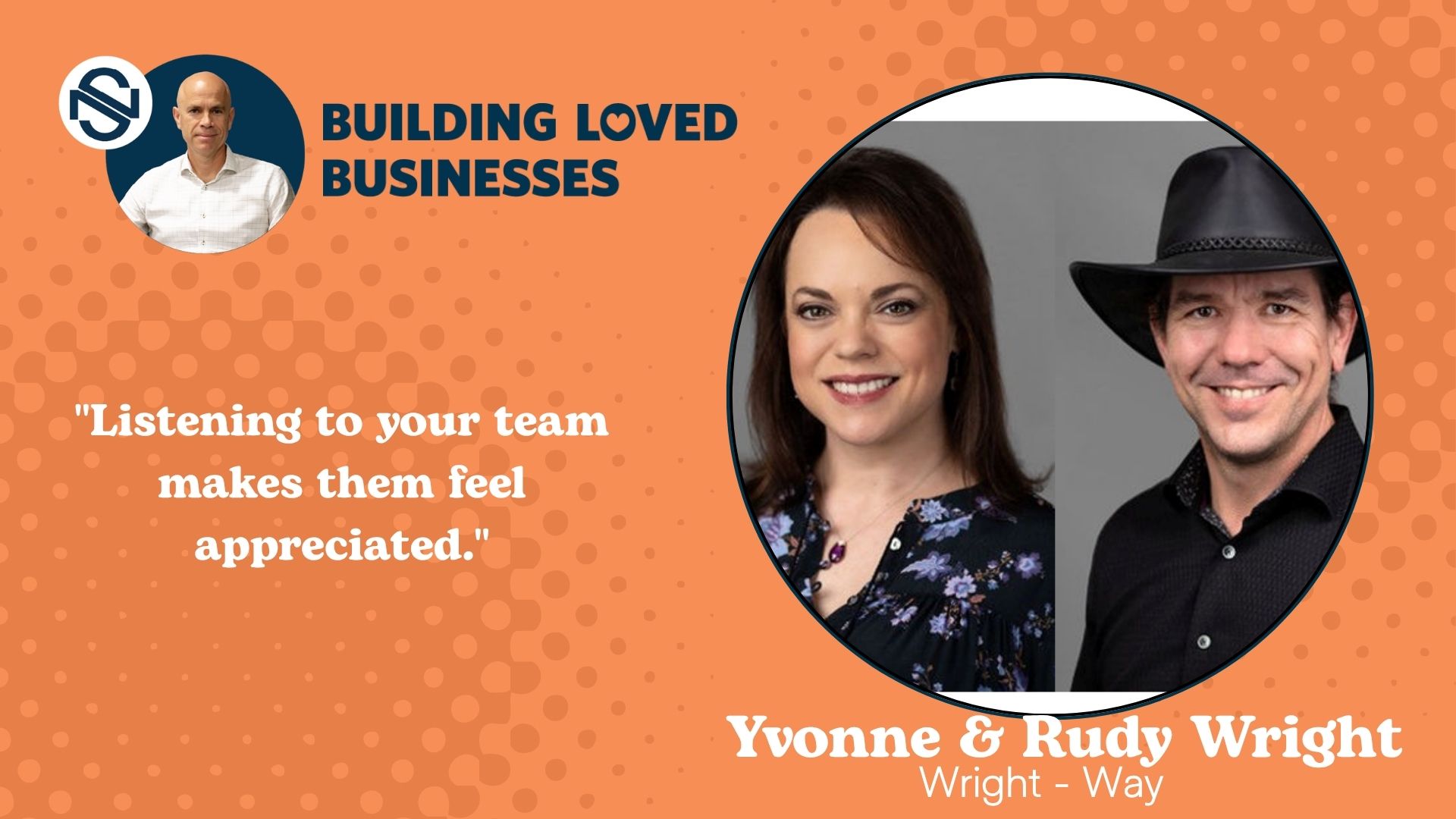
That truth was on full display during my recent conversation with Rudy and Yvonne Wright, owners of Wright-Way in Tyler, Texas.
Their story isn’t just about surviving. It’s about building a business that has earned the trust of employees, customers, and their community over more than four decades.
Sometimes You Buy a Name…and a Sinking Ship
When Rudy and Yvonne bought the family business back in 1999, they weren’t buying a thriving company.
They were buying a business that was headed toward bankruptcy.
As Rudy put it, they bought “a name, a phone number, and a sinking ship.”
Most people would have walked away.
Instead, they saw something worth saving.
Did they have certainty?
Not even close.
They were young, newly married, raising a family, and couldn’t even qualify for a traditional bank loan.
But entrepreneurs rarely have perfect conditions.
They have conviction.
That doesn’t guarantee success, but it gives you the courage to move forward.
Optimism Is Important—But the Numbers Don’t Lie
One of my favorite moments from our conversation came when Rudy admitted he got “fired” from estimating jobs.
Why?
Because he was too nice.
He couldn’t bring himself to charge enough to make money.
When someone else started bidding projects, the profit margins immediately improved.
That lesson highlights something every business owner eventually learns:
Your emotions matter. Your numbers matter more.
Too many entrepreneurs avoid looking at their financials, especially when business gets busy.
But if you’re not reviewing your numbers consistently, you’re making decisions in the dark.
The Wrights have built an incredible business because they let the numbers tell the truth—even when that truth required uncomfortable changes.
Listen to Customers—But Stay Disciplined
One thing I admire about Rightway is how naturally the business evolved.
They didn’t sit in a conference room trying to invent new services.
They listened.
Property management clients needed maintenance.
Maintenance clients needed remodeling.
Remodeling clients needed construction.
Construction clients became interested in energy efficiency and solar.
Every new service came from solving a real customer problem.
But here’s what they also understood:
Not every opportunity deserves a permanent place in your business.
Over time, they eliminated divisions that weren’t producing the right results.
As Yvonne shared:
“We could be excellent at a few things or really good at a lot of things. We’d rather be excellent.”
That’s a lesson every growing company needs to hear.
Growth isn’t about saying yes to everything.
It’s about becoming exceptional at the things that matter most.
Innovation Often Requires Education
When Rightway began building high-performance, energy-efficient homes, the market wasn’t exactly ready.
In East Texas—where oil has long been part of the local economy—green building wasn’t always welcomed.
Many people assumed it was political.
Instead of arguing, Rudy and Yvonne educated.
They shifted the conversation away from ideology and toward economics.
Lower utility bills.
Lower maintenance costs.
Better long-term ownership.
The lesson?
Sometimes your greatest opportunity isn’t convincing customers to buy.
It’s helping them understand why the solution matters in the first place.
Great Culture Isn’t Built with Perks
Lots of companies say they’re “like family.”
Very few actually operate that way.
What stood out to me about Rightway wasn’t the slogan—it was the proof.
When one employee welcomed a new baby but didn’t yet have enough paid leave, the team voluntarily raised money to support him.
Leadership matched the contribution.
No policy required it.
People simply cared.
That culture didn’t happen by accident.
It happened because Rudy and Yvonne consistently treat employees like human beings instead of production units.
They listen.
They invest in people.
They understand that everyone has seasons where life gets messy.
And because employees know they’re valued, they become invested in serving customers well.
Leadership starts with listening.
In fact, one of my favorite leadership metrics is your statement-to-question ratio.
Are you spending more time telling people what to do—or asking the questions that help them find the right answers?
Great leaders don’t pretend to know everything.
They create environments where the best ideas can surface.
Building Something That Lasts
One of my favorite parts of our conversation was hearing about the next generation.
Two of Rudy and Yvonne’s daughters are now preparing to lead the business.
But succession isn’t something they’re waiting to think about.
They’re already involving them in hiring decisions, business discussions, financial conversations, and leadership meetings.
They’re allowing them to make decisions while there’s still a safety net.
That’s exactly how leadership is developed.
Not by watching.
By doing.
Final Thoughts
Every loved business has its own story.
Some begin with an exciting opportunity.
Others begin by rescuing something that’s almost gone.
But the principles behind lasting businesses are remarkably consistent:
- Courage over certainty.
- Numbers over emotion.
- Excellence over expansion.
- Listening over assuming.
- People over policies.
Businesses become loved because leaders consistently make decisions that build trust.
And trust, over time, becomes one of the most valuable assets any business can own.
If you’re building a business today, keep asking yourself:
Where do I need more courage?
What are my numbers telling me?
And what can I become truly excellent at?
Those answers often determine whether you’re simply running a business—or building one your community will love for generations.