
I talk to a lot of business owners, CEOs, and founders, and not one of them has ever told me: ‘You know what I need? Fewer leaders. There are just too many people leading in my company.’
In fact, it’s most often the opposite; they have a need for more leaders in their growing businesses. Many are struggling to develop mid-level leaders now that their business has grown beyond what the executive leadership team can manage.
Others have aging leadership ranks and are trying to adapt to a younger workforce who won’t stay at a business 10-15 years waiting for their first leadership opporunity.
And almost all of them want more people who can lead themselves.
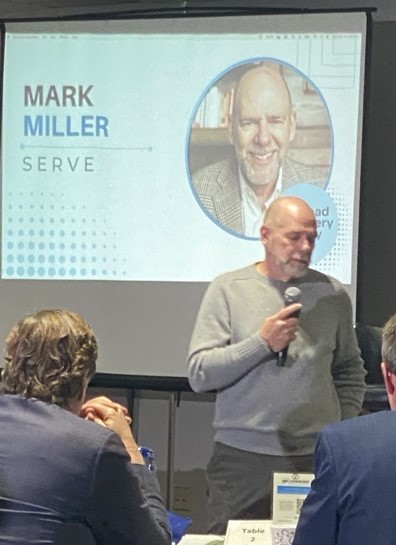
Those conversations were running through my mind when I attended a two-day CBMC leadership workshop recently where Mark Miller shared what he learned over his 44-year career at Chick-fil-A. Mark was employee #16 at the company and had risen to VP of High-Performance Leadership before leaving earlier this year to start Lead Every Day.
I came away with several gold nuggets that I will bring to my work with clients, chief among those was his recounting how they created a culture of leadership at Chick-fil-A.
Mark said that there are five steps to creating a leadership culture, which he defines as, “a place where leaders are routinely and systematically developed and you have a surplus of leaders who are ready now but have not yet been deployed.” Who wouldn’t want that?!
- Define it. You must start with a common definition of leadership for recruiting, training, and promoting.
- Teach it. If you can’t train to your leadership definition at the right scope and on the right schedule, you at best have random acts of training. Mark spent the rest of the two days talking about the habits, behaviors, and decisions you should train leaders to adopt.
- Practice it. Emerging leaders need opportunities to lead. Mark said that about 70% of leadership is learned from actually leading. But most organizations give their challenges and opportunities to existing leaders, which overloads them and robs the emerging leaders of chances to learn.
- Measure it. While this is challenging, you must know if you’re getting a return on your investment in leadership development. Implementing 360 reviews is a good start, but not enough. A leadership culture should have an increasing Employee Net Promoter Score, see goals accomplished more frequently and see more emerging leaders.
- Model it. People watch the leader and leadership is more caught than taught. What do emerging leaders learn by watching your existing leaders? Is their leadership aligned with your organizational definition? Are you recognizing and rewarding desired leadership qualities consistently?
Do those five things and you will build – not just leaders – but a culture that continuously builds leaders in your business.